
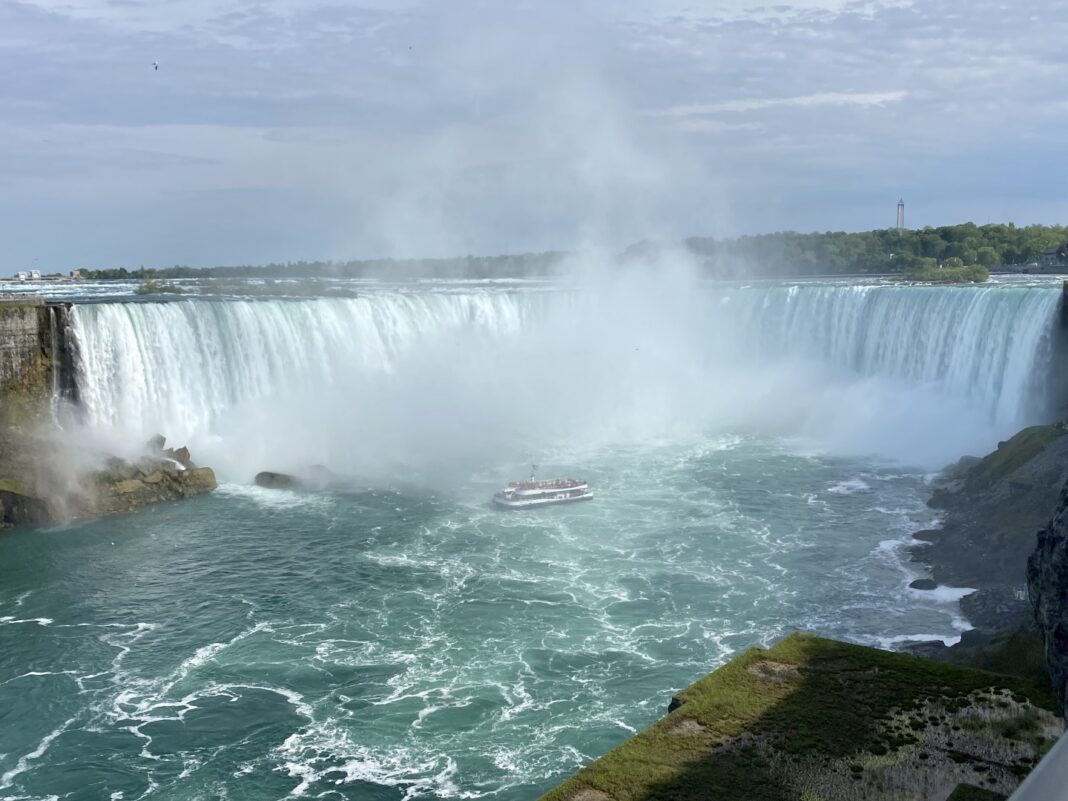

Most travelers know Niagara Falls for the thunderous roar of its cascading water, the heavy mist that clings to your jacket, and the flashing neon lights of the tourist strips. But if you step back from the edge of the gorge and let your curiosity guide you slightly north along the Niagara Parkway, a different world reveals itself. It is a world governed not by the raw power of rushing water, but by the quiet artistry of nature, stewardship, and world-class gastronomy.
Carving out a couple of days mid-week, I set out to discover this side of Niagara—an exploration of legacy, growth, and flavors that completely redefined my perspective on this iconic Canadian destination.
A 99-Acre Sanctuary on the Parkway
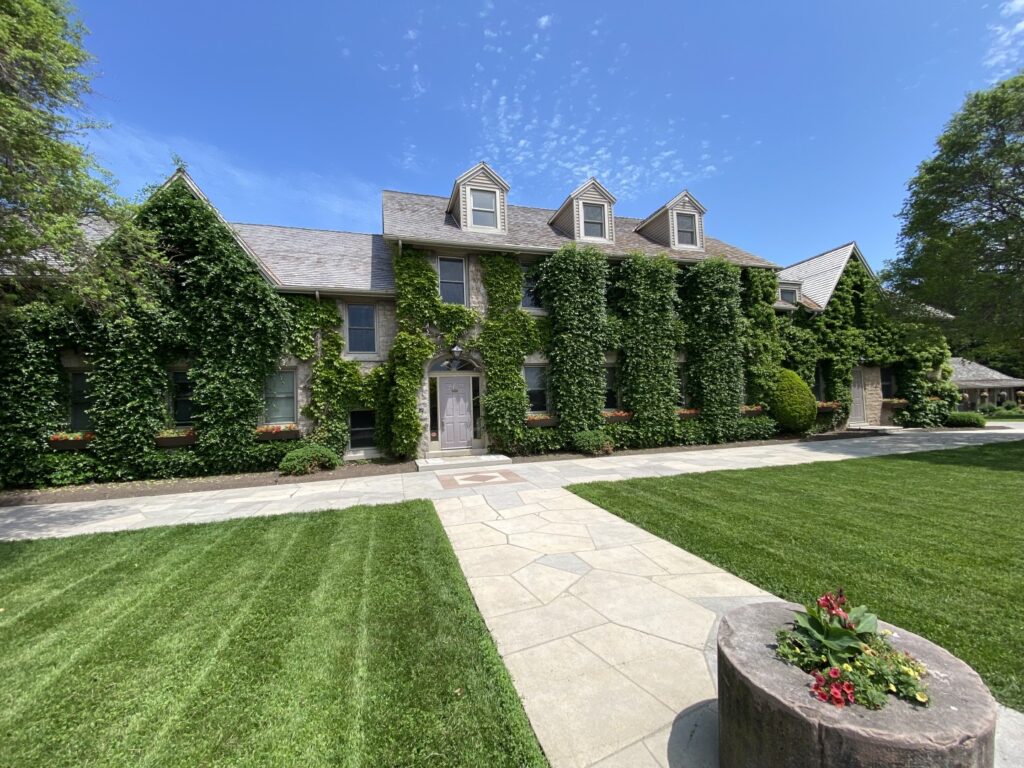
Stepping away from the slots and bright lights, I headed toward the Niagara Parks Botanical Gardens, a sprawling 99-acre sanctuary. Here, I met Charles Hunter, the passionate director of horticulture and education for Niagara Parks. Charles, an alumnus of the prestigious School of Horticulture located right on the grounds, walked me through a landscape that is both a public paradise and a living laboratory.
As we walked down the historic driveway flanked by chestnut trees, Charles pointed out the Alumni Garden, sponsored by graduates.
“Our graduates take the name of this institution globally,” he explained.
One alumnus works at Kew Gardens in London, and another is a Michelin-recognized herbalist growing microgreens in Japan.
Ninety Years of Growth
This year marks the 90th anniversary of both the school and the Botanical Gardens. Founded in 1936 during the Great Depression, the school was the brainchild of T.B. McQuesten—a highly progressive visionary who also built the QEW highway and opened the Royal Botanical Gardens in Hamilton. At a time when Niagara Parks was looking to expand its portfolio, the land—originally an orchard of apples, peaches, and plums dating back to 1919—was transformed into a premier training and research facility. It remains one of only six institutions of its kind on the planet.
As we walked past the iconic Crab Apple Vista toward the cafe, I spotted several individuals in light blue shirts gripping wheelbarrows, watering plots, and yanking weeds.
“Those are the students,” Charles noted with a nod.
Rigorous Roots: Inside a World-Class Education
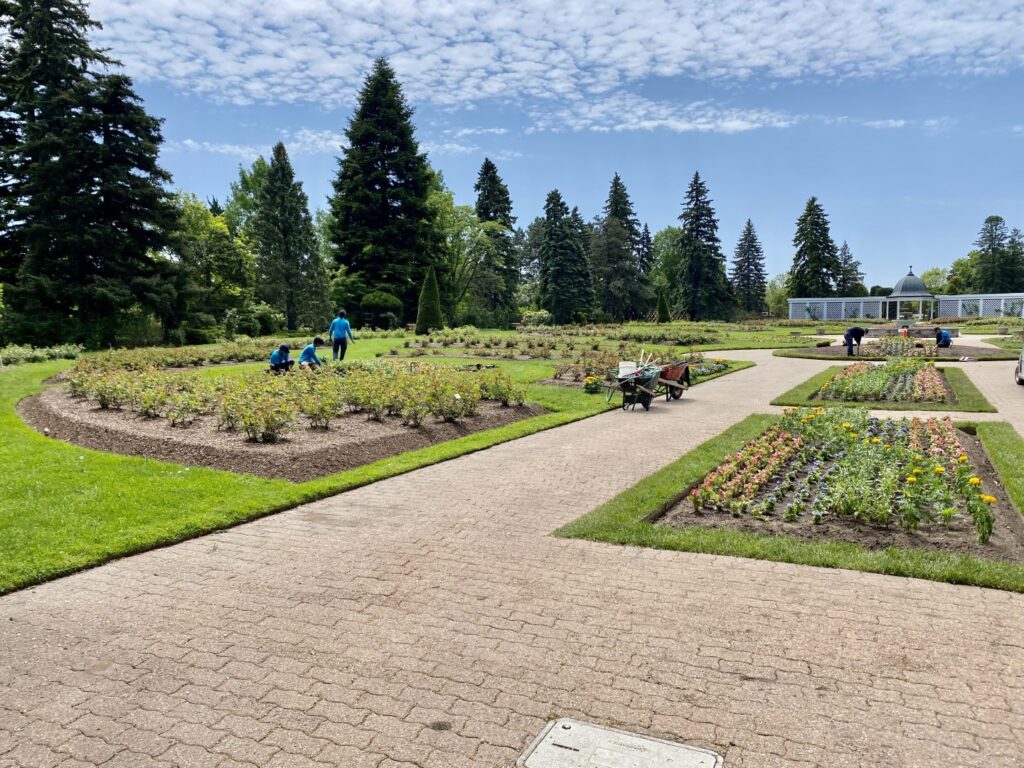
The program operates at a college level but demands university-level dedication—clocking 40 hours a week for 36 months. Only 20 students are accepted per cohort.
Students who stay in the on-site dorms truly eat, sleep, and breathe horticulture on the grounds. Ages range from 18 to 56, and all are required to have at least two years of prior experience in the green industry, for instance in a nursery or on a farm.
Specialties include plants and collections, design, and maintenance. Students learn early on that horticulture requires close observation, physical labor, and a lot of everyday aches and pains.
“The garden tells you what it needs,”Charles explained.
We paused near the Rose Garden, originally planted in 1941. Today, it is the largest rose garden in Canada and one of the largest in North America. Home to more than 2,700 rose bushes, the plot has various climbers, hybrids, teas, and shrubs that bloom from June into October. A sturdy deer fence now runs along the perimeter—a stark contrast to the property’s early days when the area housed an actual deer pen and chicken coop. During the lean years, Charles noted, venison was on the students’ menu.
Flitting Butterflies and Aiming for the Future
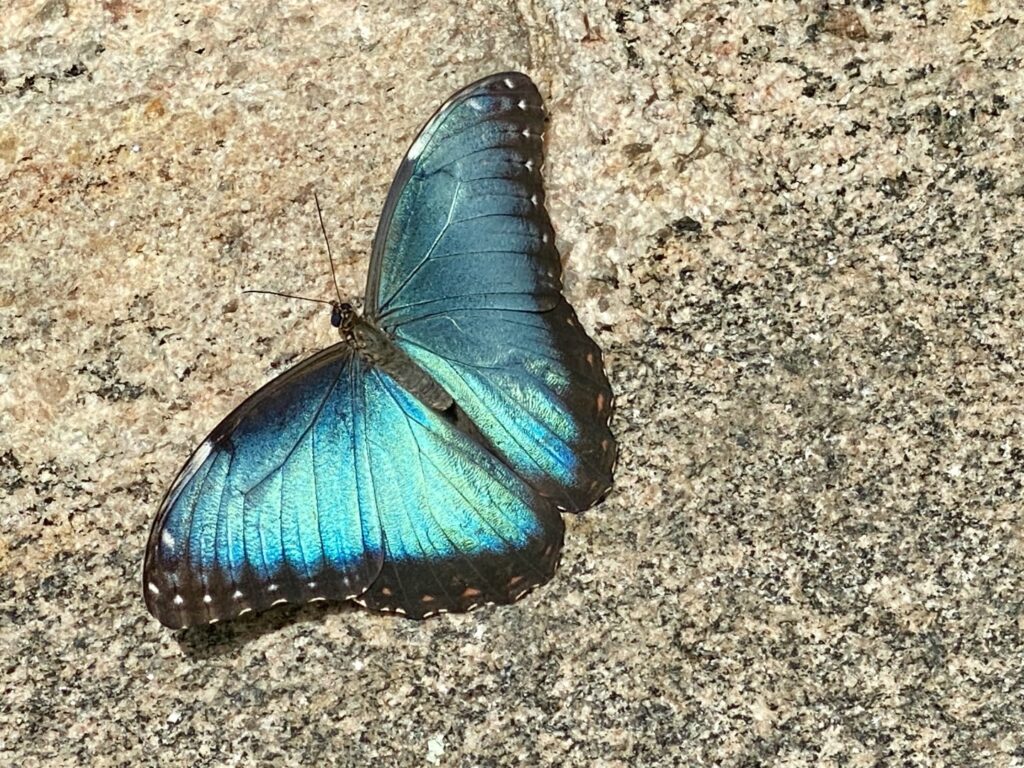
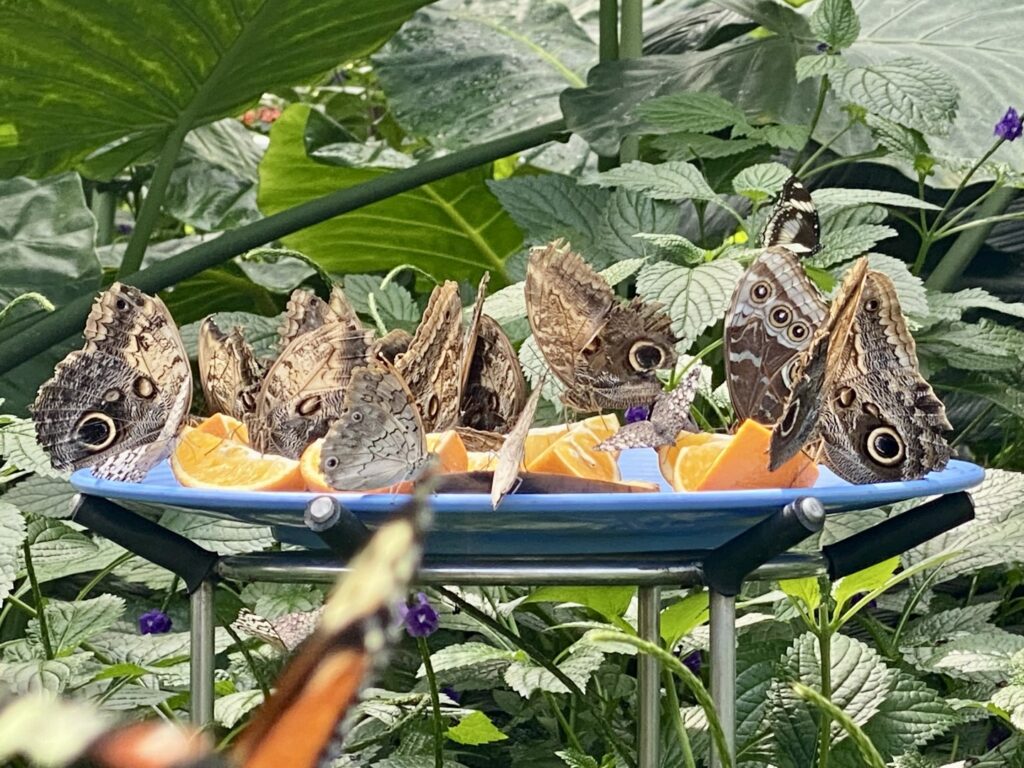
A short stroll brought us to the world-renowned Butterfly Conservatory. Inside this glass oasis, the air is warm, humid, and alive with vibrant motion. Between 2,000 and 3,000 butterflies—representing over 40 distinct species—flutter through the lush canopy.
The conservatory raises butterflies, and 30 per cent are homegrown. The remaining 70 per cent come from South and Central America.
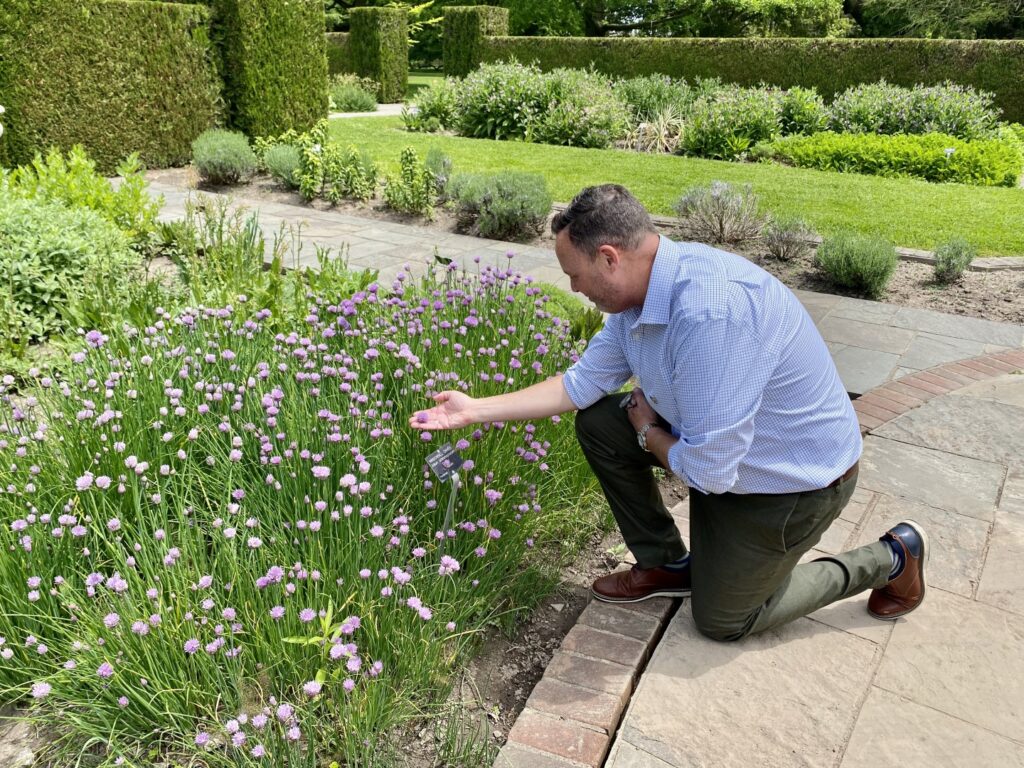
I noticed that the little creatures liked bright colors. My husband’s blue shirt was a big draw, and one landed on his shoulder.
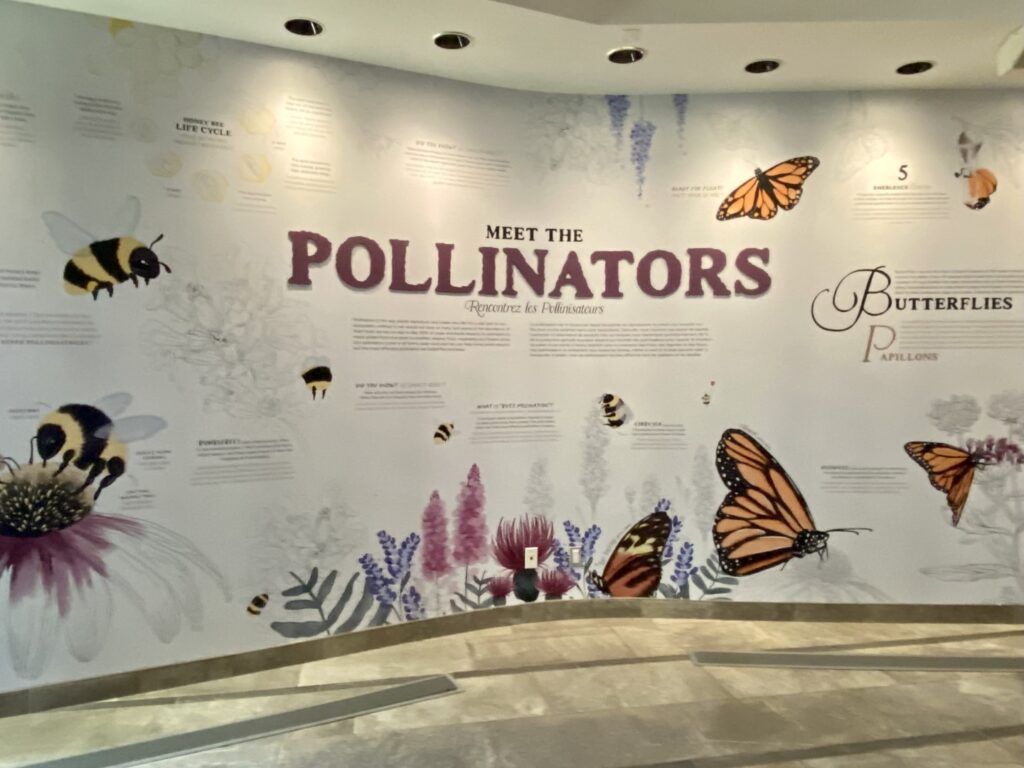
Always evolving, the conservatory has launched a brand-new Pollinator Playground. It features a fun interactive element where children can draw their own pollinators and watch them get scanned directly onto a digital screen.
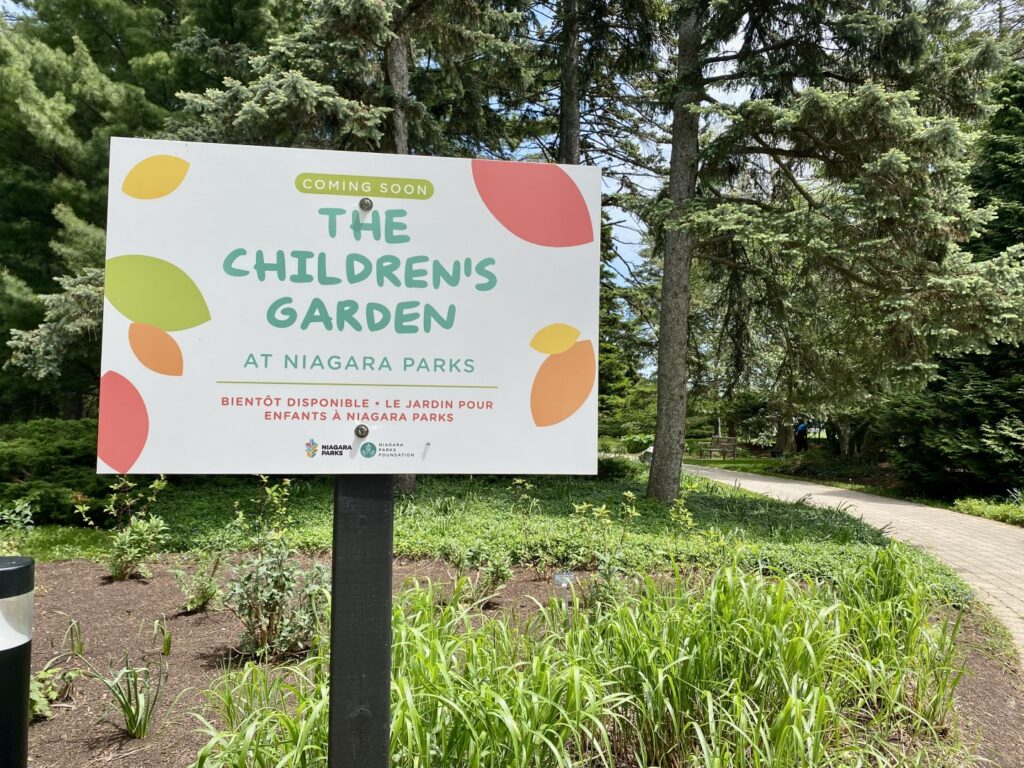
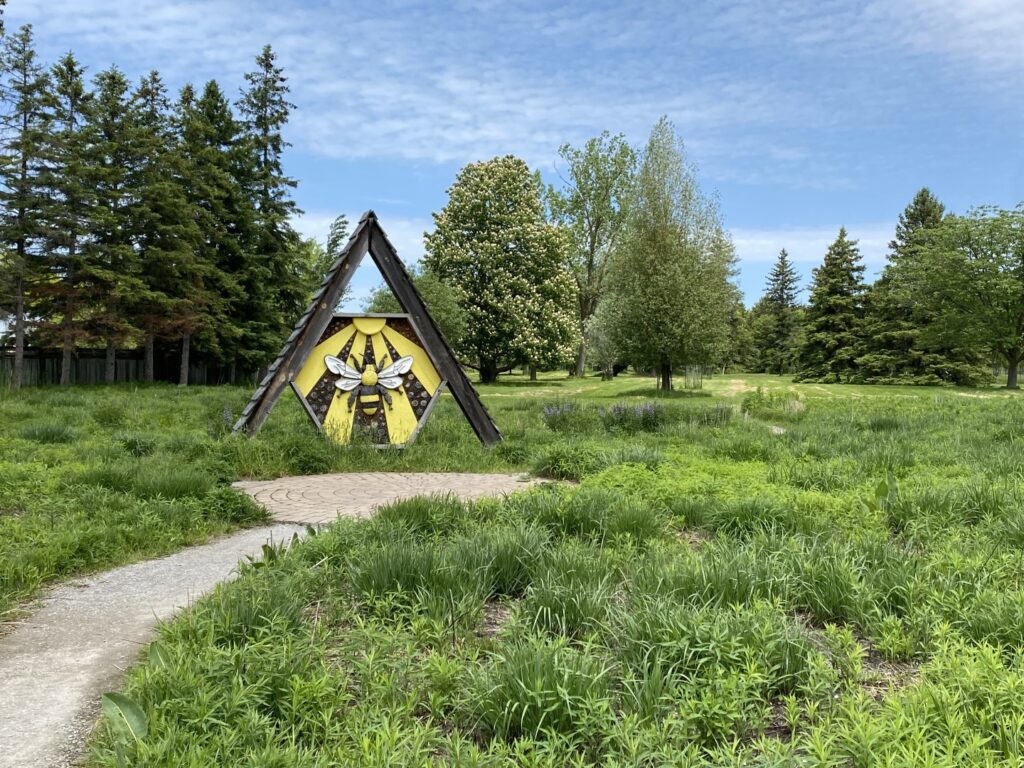
Looking forward, Niagara Parks is investing in the next generation with a $15 million Children’s Garden project. Spanning 1.4 hectares, it will be the only dedicated garden of its kind in Canada. This space features wetlands, meadows, and woodlands with more than 800 salvaged trees. The highlight will be a tree canopy walk elevated 5 meters in the air.
The focus of the garden is to teach children aged 5 to 12 how animals behave within the ecosystem and why roots, trunks, and leaves are vital to all living creatures, including humans.
A Symphony of Culinary Delights
The culinary crown jewel of our trip was dinner at AG Inspired Cuisine. Under the masterful direction of Chef Cory Linkson, AG embodies an uncompromising farm-to-fork philosophy. Vegetables are picked from the restaurant’s farm in the morning, brought to the kitchen before noon, and served on your plate that night. Changing through the seasons, the menu mirrors the cycle of nature.
Dinner was a symphonic blend of local agriculture. We began with Niagara asparagus and sweet pea salad drizzled with rich herb hollandaise, alongside truffle-honey-drenched sunchokes complemented by black truffle, bee pollen, and a French onion crema. Next came small plates – delicate carpaccio of beef tenderloin with feta and green goddess dressing, chili-charred octopus, and roasted candy beets featuring a decadent Taleggio cheese brûlée. For the main course, some signature Farm-to-Fork options were AAA flank steak, wild-caught sea scallops, charred half Cornish hen, and rich venison bolognaise. I had the roasted loin of Red deer. It was tender and deliciously succulent. Dessert was a deconstructed cheesecake with shortbread cookies on a plate strewn with edible flowers.
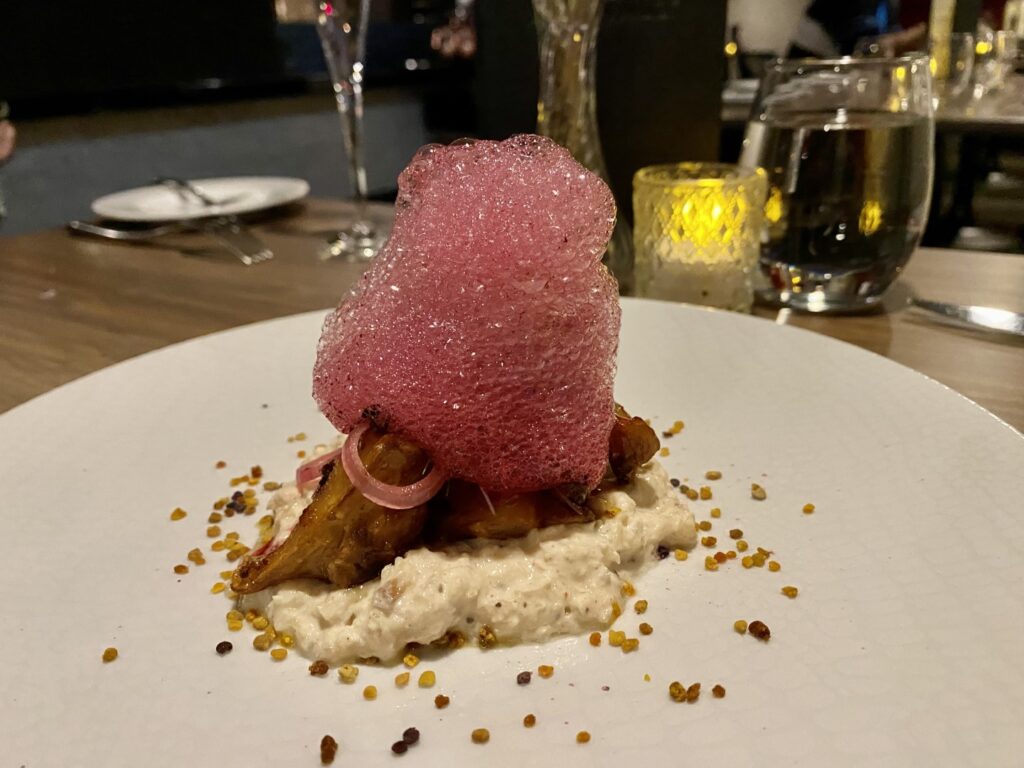
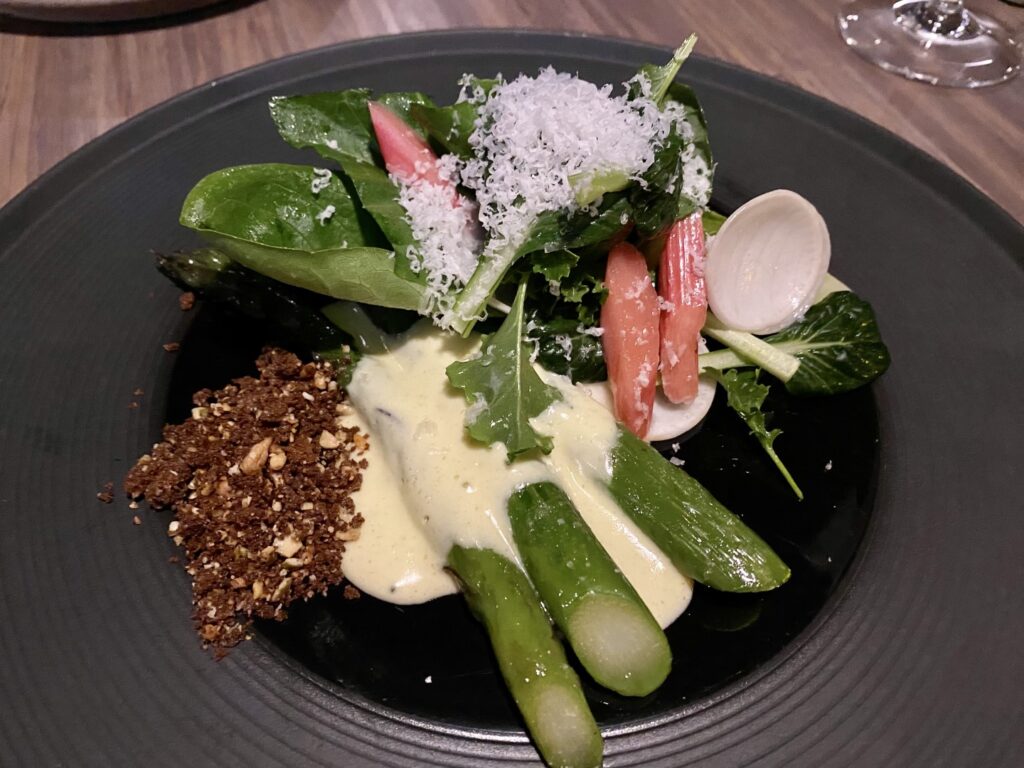
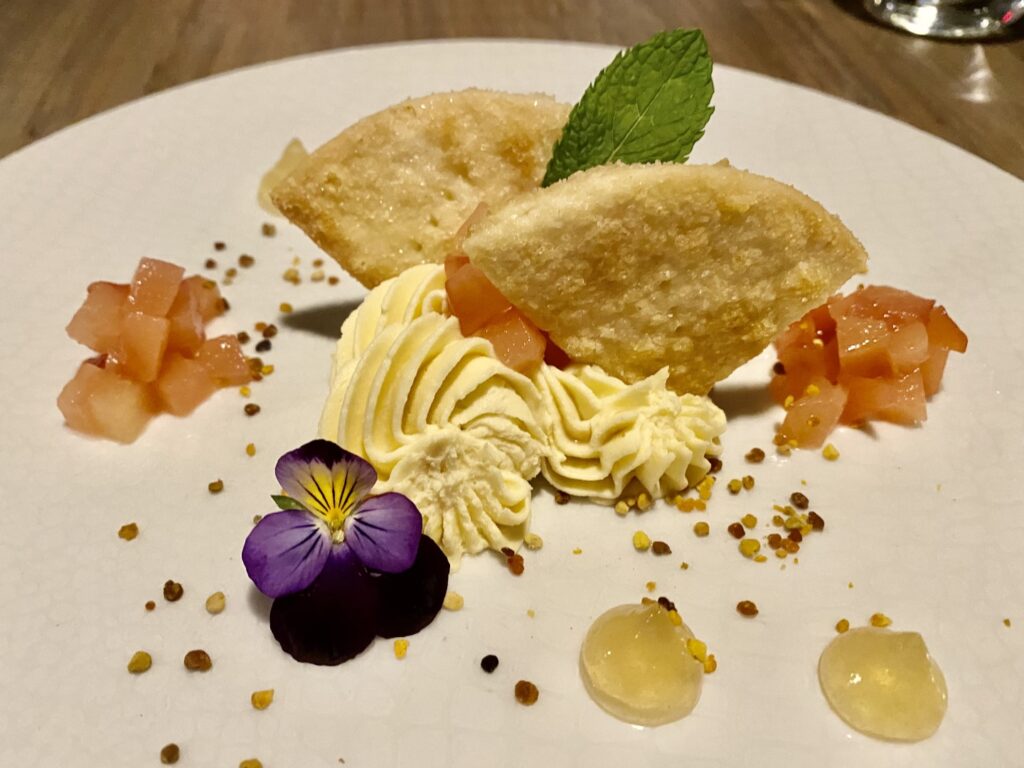
On the menu I spied a note about the AG Busy Bee Honey Factory. The restaurant manages its own hives, harvesting raw, unpasteurized honey and bee pollen that Chef Linkson uses in his recipes.
As I sat there in the soft candlelight, tasting the region’s bounty, I realized that Niagara offers far more than a spectacular waterfall. It is a community of passionate educators, tireless students, and visionary chefs, all working together to create a stunning homage to the natural world around them.
IF YOU WANT TO DIVE INTO OTHER FALLS ACTIVITIES
Up in the Air: Niagara Helicopters offers a 12-minute trip that loops over the falls, the Whirlpool Rapids, and Rainbow Bridge.
Journey Behind the Falls: Descend 125 ft by elevator to a tunnel that leads to two outdoor observation decks and two portals located directly behind the Falls. The sound of rushing water is amazing.
Niagara Takes Flight: Immersive flying theatre that takes you along the Niagara River corridor and over the Falls. Strap into your seat and, with dangling feet, off you go!
Niagara City Cruises: Grab a rain poncho before boarding a two-level vessel that takes you face-to-face with Horseshoe Falls. This ride never gets old.
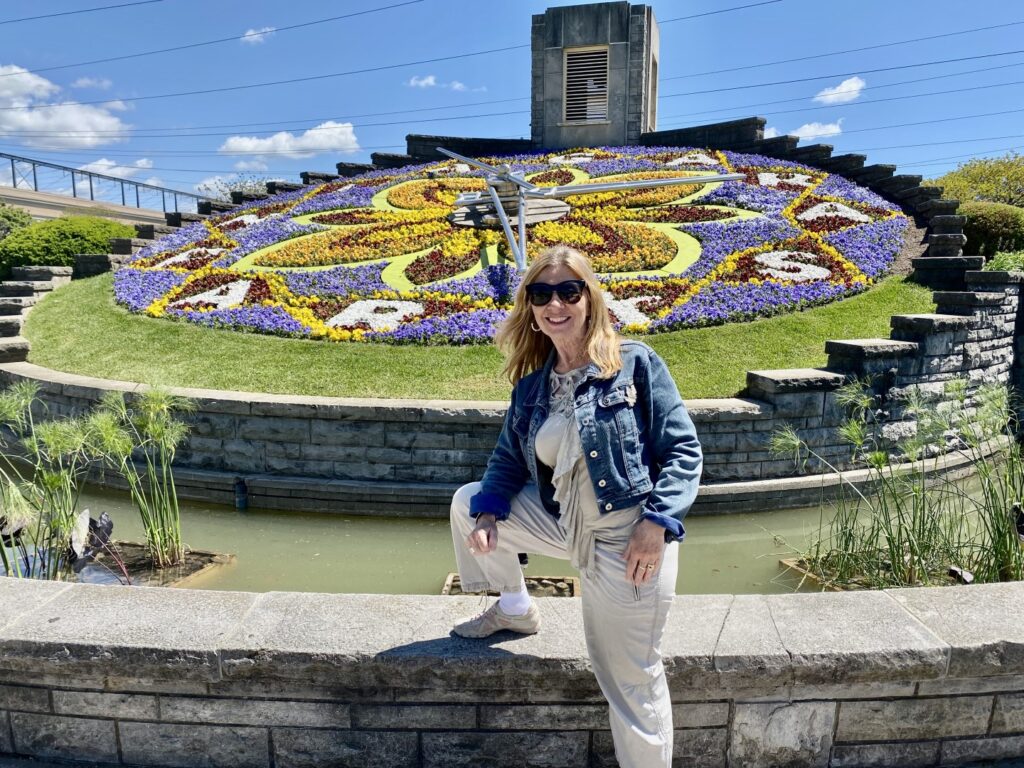
Recommended Eateries: Niagara Parks has lots of choices, and we enjoyed Table Rock Bistro + Wine Bar with rooftop patio views of Horseshoe Falls; Red Ganache Bake Shop was lovely for breakfast and in the Fallsview District.
Wineries: There are loads to choose from, but the three we enjoyed were Chateau des Charmes, Riverview Cellars, and Ravine Vineyard Estate Winery (which also has a bistro and bakery).
Skylon Tower: A funky, iconic destination with panoramic views of the Falls. It even has a revolving restaurant and small museum with vessels that have taken people over the Falls.
Jordan Station: Stop at this village on the way home and visit Cave Springs Winery for tastings, boutiques for artisanal shopping, and RPM Bakehouse for lunch. Their rich, velvety quiche is a must!
Area Information: Niagara Parks
TO STAY
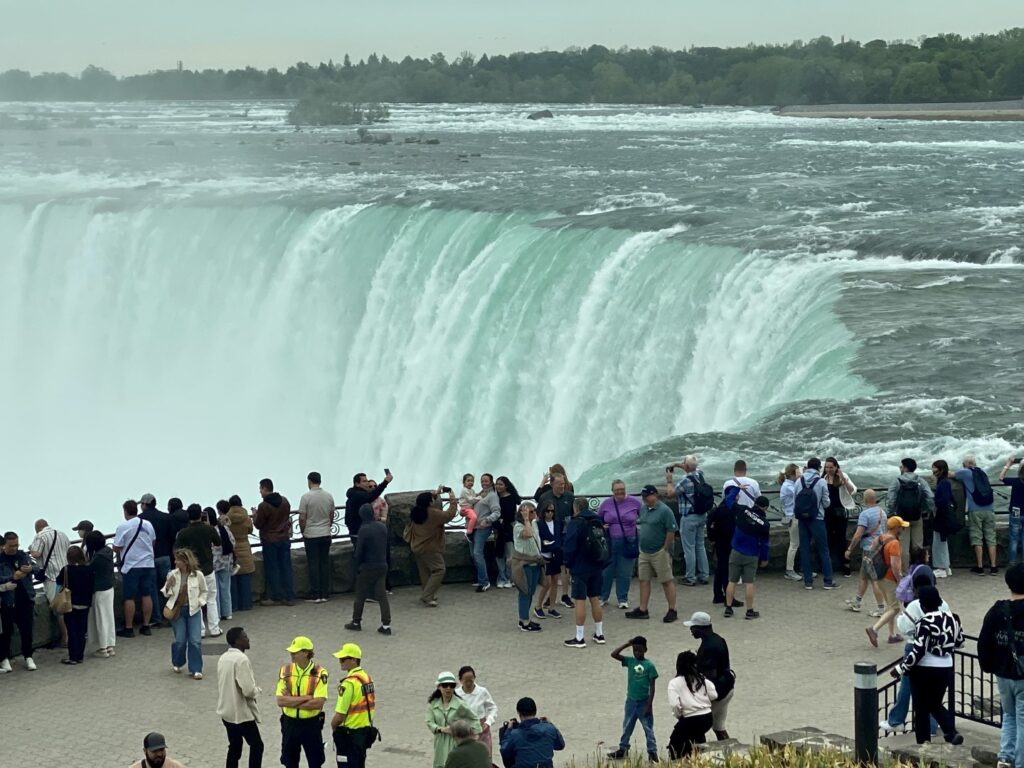
For fantastic views of the thundering cascade, Fallsview Casino Resort is one of the best. Plus, it has a pool, fitness centre, shops and great restaurants. The casino has more than 3,500 slot machines and 130 table games, while the OLG Theatre brings in big-name performers.